Before the visible day
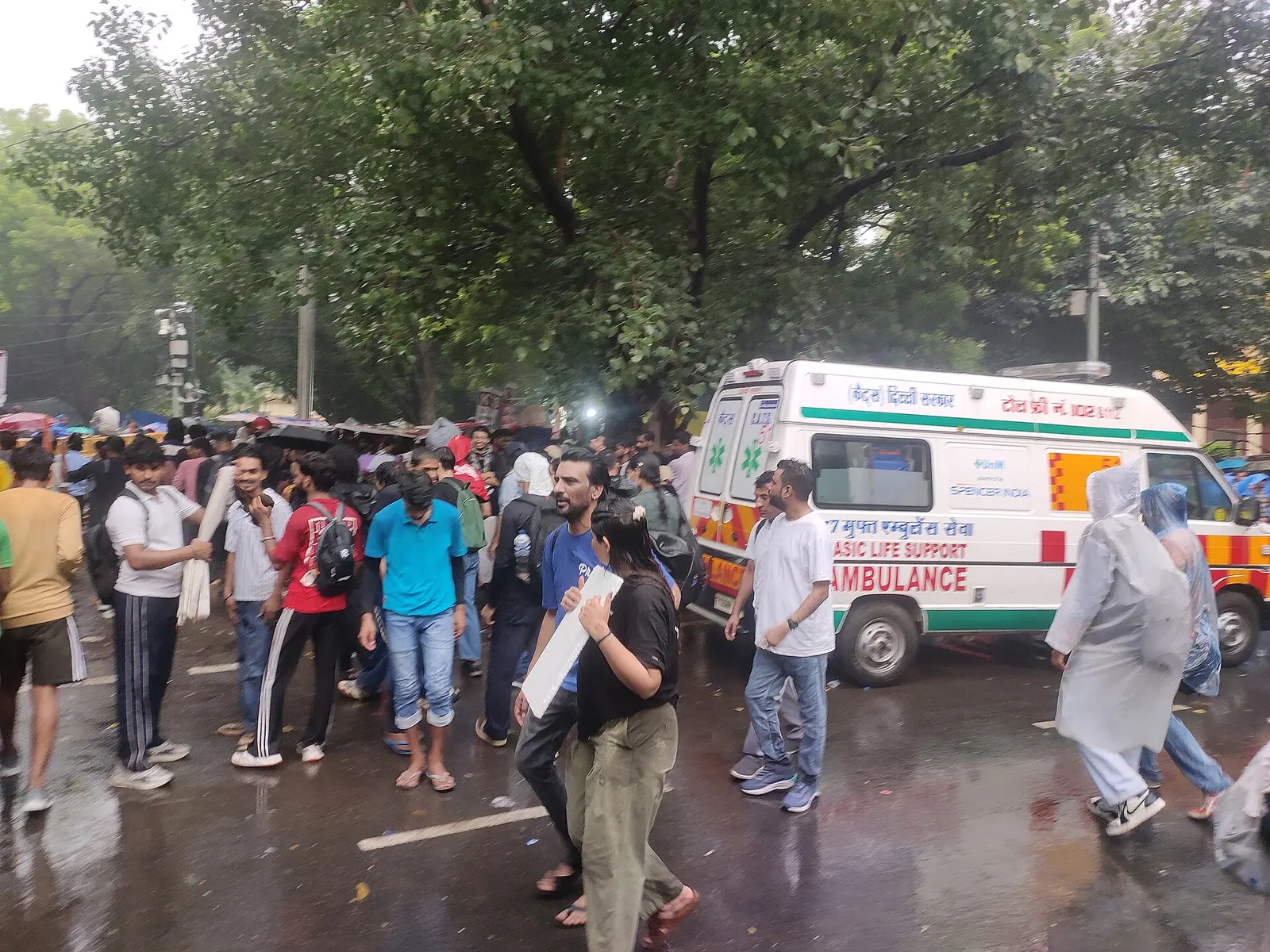
From the bench, a judge called unemployed young people cockroaches. The word stuck — the way an insult does when it names something people already feel. Around the same time, the medical entrance exam that two million students had staked a year of their lives on was thrown out for leaks. A graduate watching from Boston posted a half-joke: what if the cockroaches all turned up at once? Within a few weeks, they had.
The cause
Why people rose
- The NEET medical entrance exam was scrapped on 3 May after the paper leaked. Two million students had to sit it all over again.
- From the bench, the Chief Justice likened jobless youth to cockroaches and parasites. What people heard was contempt.
- None of it was new — the leaks, the waiting, the sense of being talked down to. The post just gave the anger somewhere to go.
What came before
Before the tents, there were the leaks: exam after exam, year after year, and the petitions that went nowhere. An online following had already swelled past twenty million. All of it circled one plain request people had been making for a long time — an exam they could trust.
In their own terms
What people are asking for
- 01
A real law for public exams, and honest bodies to run them.
- 02
A charter of students' rights, a welfare fund, and Parliament keeping watch over the exam agencies.
- 03
The education minister, Dharmendra Pradhan, to go.
- 04
And a longer list beyond the exam — independent public media, tighter rules on lawmakers who switch sides.
The people
Who carried the demand
Mostly the young: students, fresh graduates, parents who brought their children along. An education activist joined by refusing food. The opposition politicians came later, once the crowd was too big to ignore. We name the people who chose to stand in public and hold back the ones who didn't — because a protester's face can become a police file.
How the movement travelled
How it unfolded
- May 2026
An exam is thrown out, and a word lands
The 3 May NEET results are cancelled over leaks. Around the same time the “cockroach” remark spreads, and a satirical post picks up a following fast.
- 6 June 2026
The sit-in begins
The first protest reaches Jantar Mantar. Nobody leaves. The camp holds for more than four weeks.
- 28 June 2026
A hunger strike, in solidarity
Sonam Wangchuk stops eating in support. Around 18 July, after some twenty days without food, he is taken to hospital.
- 20–21 July 2026
A march on Parliament meets force
Thousands walk toward Parliament. Police answer with tear gas and batons. Human Rights Watch and reporters call it excessive; dozens on both sides are hurt.
- 22–25 July 2026
Talks begin as the fast ends
A minister finally sits down with them. An opposition leader is briefly detained near the Prime Minister's house. The government hints the education minister may go, and Wangchuk ends his fast on day 26.
The accounts
Who is speaking, and what they said
Each account sits beside the part of the story it speaks to. Who is talking is part of what the words mean.
What they say it's about
They keep repeating that this isn't about a party or a chair — it's about an exam young people can trust and institutions that answer for themselves. Their founder called the police response “really cruel and evil.” (Reported by TIME and Al Jazeera.)
What an outside body found
Human Rights Watch said the force used against largely peaceful protesters in Delhi on 20 July went well past anything the situation called for. (Statement, 23 July 2026.)
What the state says
Silence first. Then a defence of how the leaks had been handled. Then, as the crowd held, talk of compensation and the minister's future. (Reported by The Washington Post and TIME.)
What power did
The institutional response
- Police met the march on Parliament with barricades, tear gas and batons. People were hurt on both sides.
- An opposition leader was briefly picked up near the Prime Minister's residence.
- A senior minister eventually came to the table, and word went out that the education minister might resign.
What remains unclear
What we still don’t know
- How many were injured on 20 July, and exactly what individual officers did.
- Whether the government fixes how exams are run, or just pays out for this one.
- Whether twenty million followers become a movement that lasts once this exam is settled.
After attention left
What came after
The cameras will move on after the handshake. We'll stay for the slower questions: whether the promised law actually arrives, whether exams get cleaner, and whether the students who were beaten or detained pay for it quietly, months from now.
The evidence, attached
Where this came from
Every account above is drawn from public reporting. Each source links out, so you can read it yourself.
- TIME — What is the youth-led ‘Cockroach’ movement staging mass protests in India?
- Al Jazeera — ‘Won't back down’: Indian student protesters return after police crackdown
- Human Rights Watch — India: Excessive Force Used Against Student Protesters
- The Washington Post — India protest movement holds capital sit-in as police crack down
About this record
What this prototype is, and is not.
A prototype record of a story that is still moving, put together from public reporting on 25 July 2026. Some of it will change. None of it has been through Rise's own checks yet.
This is a demonstration of how a published Rise record would read. A real record would additionally pass independent corroboration, translation review, and safety and legal review before publication.